Category Archives: Documents

1700s

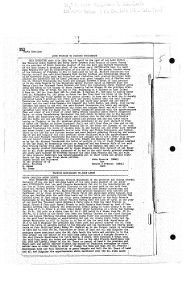
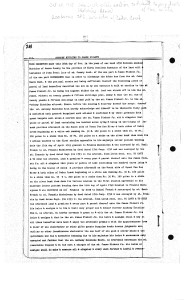
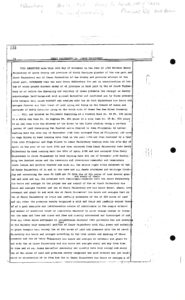
Deed: Andrew Falkinburgh buys 200 acres in Anson Co., NC from Caleb Howell

1750

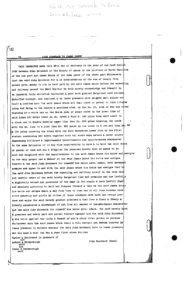
Deed: Andrew Falkinburgh buys 200 acres in Anson Co., NC from Caleb Howell

May 1, 1750

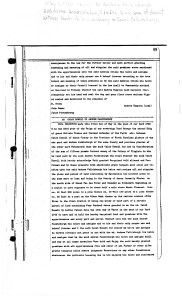
On 1 May 1750, Caleb Howell sold Andrew Falkinburgh 200 acres on the south side of the Great Pee Dee, "supposed to be about half a mile above Mount Pleasant." This is the earliest record of Andrew. Among the witnesses is "Hendrick Valkenbury," very likely Henry written in the Dutch/German form of his name, along with Isaac Falkinburgh. Andrew was possibly Henry's son, but that is not yet confirmed.
Read the full transcription →

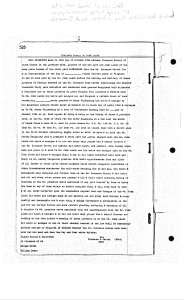
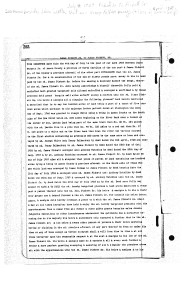
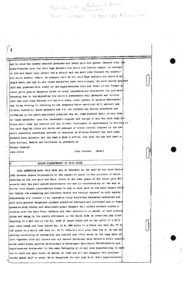
Deed: Fitzgarrald and Willson sell 200 acres in Anson Co., NC to Isaac Falkenbourgh

1751

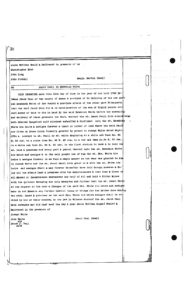
Deed: Fitzgarrald and Willson sell 200 acres in Anson Co., NC to Isaac Falkenbourgh

April 17, 1751

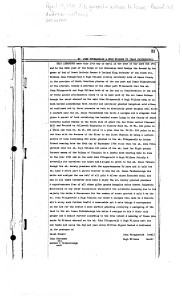
On 17 April 1751, John Fitzgarrald and Hugh Willson sold Isaac Falkinbourgh 200 acres on the Great Pee Dee called Pleasant Hill. This original deed settles the conflicting dates in the later deeds. Andrew Falkenbourgh witnessed by his mark, and he and Isaac were possibly brothers, but that is not yet confirmed.

Read the full transcription →

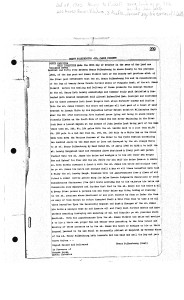
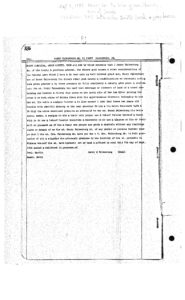
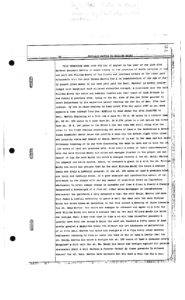
Deed: Edward Coffey sells 150 acres in Anson Co., NC to Henry Faulconborough

1752

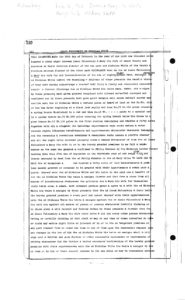
Deed: Edward Coffey sells 150 acres in Anson Co., NC to Henry Faulconborough

August 15, 1752

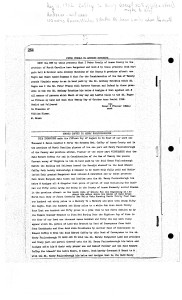
In August 1752, Henry Faulconborough bought 150 acres on the northeast side of Jones Creek, about six miles above its mouth, from Edward Coffey. Andrew Falkenburg witnessed. In 1770, "Henery Fortenberry" sold this same tract, either the aging Henry or possibly a younger heir (not yet confirmed).

Read the full transcription →

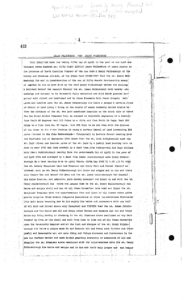
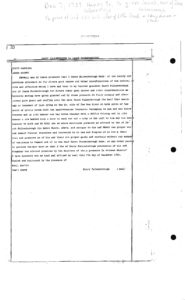
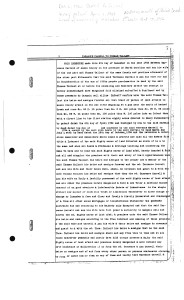
Deed: John McDaniel sells 150 acres in Anson Co., NC to Andrew Faulkinbrough

1752

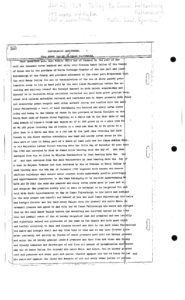
Deed: John McDaniel sells 150 acres in Anson Co., NC to Andrew Faulkinbrough

December 18, 1752

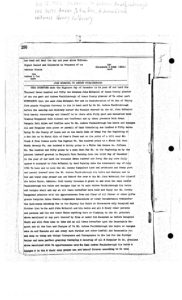
On 18 December 1752, John McDaniel sold Andrew Faulkinbrough 150 acres on Jones Creek for £35. Henry signed as a witness by his mark. Andrew sold the same land in 1761 for the same price. Andrew was possibly Henry's son, but that is not yet confirmed.
Read the full transcription →

Deed: Mackilwain sells 200 acres in Anson Co., NC to John Leeth

1753

Deed: Mackilwain sells 200 acres in Anson Co., NC to John Leeth

September 5, 1753

Surveyor Francis Mackilwain sold John Leeth 200 acres on both sides of Cedar Creek, south of the Pee Dee. Leeth was a neighbor and associate of Henry Falkenburg. He is possibly the source of the later Fortenberry given name "Leath," but a family connection is not yet confirmed. Note: the post title says 1759, but the evidence suggests 1753.

Read the full transcription →

Deed: Henery Falkenburgh (signed in Dutch) sells 80 acres in Anson Co., NC to Tarrance Carrel

1754

Deed: Henery Falkenburgh (signed in Dutch) sells 80 acres in Anson Co., NC to Tarrance Carrel

January 13, 1754

In January 1754, Henry Falkenburgh sold Tarrance Carrel about 80 acres at the mouth of Naked Creek on the Great Pee Dee. The clerk noted that Henry "signed in Dutch," strong evidence that he wrote in German script and fitting the Falkenberg/Valkenburg origin of the name. Isaac Falkenburgh witnessed by his mark.

Read the full transcription →

Deed: Carrel sells the Naked Creek tract in Anson Co., NC to John Leath

1754

Deed: Carrel sells the Naked Creek tract in Anson Co., NC to John Leath

October 15, 1754

On 15 October 1754, Torrance Carrel sold John Leath the 80 acres at the mouth of Naked Creek that Henry Falkenburg had patented in 1750. The deed confirms the land's chain of title and ties Leath to the Falkenburg family in the early 1750s. Leath is possibly the source of the later family name "Leath" (as in James Leath Fortenberry), but this is not yet confirmed.

Read the full transcription →

Deed: Henry Falkenbourg sells 200 acres in Anson Co., NC to James Pickett

1755

Deed: Henry Falkenbourg sells 200 acres in Anson Co., NC to James Pickett

October 28, 1755

On 28 October 1755, Henry Falkenbourg sold James Pickett 200 acres on the south side of the Great Pee Dee. The tract was part of Joseph White's 1746 patent and adjoined John Leeth's land. Leeth is possibly the source of the family's later "Leath" name, but this is not yet confirmed.

Read the full transcription →

Deed: John Leeth sells the 80-acre Naked Creek tract in Anson Co., NC back to Tarance Carrell

1756

Deed: John Leeth sells the 80-acre Naked Creek tract in Anson Co., NC back to Tarance Carrell

March 2, 1756

In March 1756, John Leeth sold the 80-acre Naked Creek tract, first patented to Henry Falkenborough in 1750, back to Tarance Carrell for £40. That is nearly double what Carrell paid Henry two years earlier. Leeth's name possibly explains the "Leath" later used as a Fortenberry middle name, but no family link has been confirmed yet.

Read the full transcription →

Lease: Henry Falkenborough leases 134 acres in Anson Co., NC to Jacob Falkenborough

1756

Lease: Henry Falkenborough leases 134 acres in Anson Co., NC to Jacob Falkenborough

April 28, 1756

On 28 April 1756, Henry Falkenborough leased 134 acres on the south side of the Pee Dee to Jacob Falkenborough for five shillings and one peppercorn a year, the first half of a lease and release. The witnesses were John Leeth and Isaac Falkenborough. Jacob was possibly Isaac's brother, but that is not yet confirmed.

Read the full transcription →

Release: Henry Falkenborough releases 134 acres in Anson Co., NC to Jacob Falkenborough

1756

Release: Henry Falkenborough releases 134 acres in Anson Co., NC to Jacob Falkenborough

April 29, 1756

On 29 April 1756, Henry Falkenborough released to Jacob Falkenborough a 134-acre plantation on the south side of the Great Pee Dee. This is the second step of an old "lease and release" conveyance. This Jacob was possibly Henry's own son rather than his grandson Jacob, son of Isaac, but that is not yet confirmed.

Read the full transcription →

Deed: Jacob Falkenburgh sells 150 acres in Anson Co., NC to Isaac Falkenburgh

1756

Deed: Jacob Falkenburgh sells 150 acres in Anson Co., NC to Isaac Falkenburgh

December 20, 1756

On 20 December 1756, Jacob Falkenburgh sold Isaac Falkenburgh 150 acres on the north side of the Pee Dee, land Jacob held by his own 1754 patent. A patent in his own name shows this Jacob was already an adult. He was very likely Henry's son and possibly Isaac's brother, but that is not yet confirmed.

Read the full transcription →

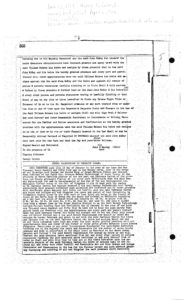
Lease: Jacob Falkenbury leases 134 acres in Anson Co., NC to Henry Falkenbury

1757

Lease: Jacob Falkenbury leases 134 acres in Anson Co., NC to Henry Falkenbury

January 18, 1757

In January 1757, Jacob Falkenbury leased the same 134-acre Pee Dee plantation back to Henry for a yearly rent of one peppercorn, the first step in returning the land. The family seems to have passed this tract back and forth within Henry Sr.'s line. This Jacob was possibly Henry's son and not his grandson, but that is not yet confirmed.
Read the full transcription →

Release: Jacob Falkenbery releases 125 acres in Anson Co., NC to Henry Falkenbury

1757

Release: Jacob Falkenbery releases 125 acres in Anson Co., NC to Henry Falkenbury

January 18, 1757

The day after the lease, on 18 January 1757, Jacob Falkenbery formally released the Pee Dee plantation to Henry Falkenbury for £100. Henry had given Jacob the land only nine months earlier. The deed calls it 125 acres instead of 134, possibly a typing slip (not yet confirmed).

Read the full transcription →

Deed: Isaac Falkenburgh sells 150 acres in Anson Co., NC to James Muckleroy

1757

Deed: Isaac Falkenburgh sells 150 acres in Anson Co., NC to James Muckleroy

January 27, 1757

Five weeks after buying it, on 27 January 1757, Isaac Falkenburgh resold Jacob's 150-acre patent to blacksmith James Muckleroy, making a £12 10s profit. This deed explains the "James McElroy" named in later deeds for the land.

Read the full transcription →

Deed: Isaac Faulkenbury sells 200-acre Pleasant Hill in Anson Co., NC to Henry Falkenbury

1758

Deed: Isaac Faulkenbury sells 200-acre Pleasant Hill in Anson Co., NC to Henry Falkenbury

April 25, 1758

On 25 April 1758, Isaac Falkenbury sold his father Henry the 200-acre Pleasant Hill tract on the Great Pee Dee for £50. Two years later, Henry sold it to Isaac's son Jacob. Isaac possibly arranged this so the land would pass to his son, but that motive is not yet confirmed.

Read the full transcription →

Deed: John Leeth’s executor auctions his 200 acres in Anson Co., NC to James Pickett Jr.

1758

Deed: John Leeth’s executor auctions his 200 acres in Anson Co., NC to James Pickett Jr.

October 28, 1758

In October 1758, executor Anthony Hutchins sold John Leeth's 200 acres on Cedar Creek at auction to James Pickett Jr. to pay the debts of Leeth's estate. This shows John Leeth had died by 1758. His name is possibly the root of the later Fortenberry middle name "Leath," but this is not yet confirmed.

Read the full transcription →

Deed: Pickett Jr. sells 300 acres in Anson Co., NC to Pickett Sr.

1759

Deed: Pickett Jr. sells 300 acres in Anson Co., NC to Pickett Sr.

July 4, 1759

In July 1759, James Pickett Jr. sold his father two Pee Dee parcels. One was the 200 acres Henry Falkenbourg had sold in 1755, next to "Jno. Leeth's land." The deed traces the tract back through Henry to Joseph White's 1746 patent. A family link to Leeth is possible but not yet confirmed.

Read the full transcription →

Deed of Gift: Henry Falkenburg, Sr. gives half of a 134-acre tract in Anson Co., NC to grandson Henry Falkenburg, Jr.

1759

Deed of Gift: Henry Falkenburg, Sr. gives half of a 134-acre tract in Anson Co., NC to grandson Henry Falkenburg, Jr.

September 7, 1759

On 7 September 1759, Henry Falkenburg Sr. gave half of a 134-acre tract on Smiths Creek, plus an iron-gray colt, to his "well beloved grand son, Henry Falkenburg son of Jacob Falkenburg." The "Henry Jr." in the heading was a grandson, not a son, and the deed proves that Henry Sr. had a son named Jacob.

Read the full transcription →

Deed of Gift: Henry Falkenborough gives half his land in Anson Co., NC to grandson Jacob Falkenborough

1759

Deed of Gift: Henry Falkenborough gives half his land in Anson Co., NC to grandson Jacob Falkenborough

December 7, 1759

In December 1759, Henry Falkenborough Senr. gave his "beloved grandson Jacob Falkenborough son of Isaac" half his land at the mouth of Little Creek, plus a bay horse and a cow. This deed of gift proves three generations: Henry, his son Isaac, and Isaac's son Jacob.

Read the full transcription →

Deed: Henry Falkenbury sells 200-acre Pleasant Hill in Anson Co., NC to Jacob Falkenbury

1760

Deed: Henry Falkenbury sells 200-acre Pleasant Hill in Anson Co., NC to Jacob Falkenbury

November 14, 1760

In November 1760, Henry Falkenbury sold "Jacob Falkenbury son of Isaac" the 200-acre Pleasant Hill tract, the land Isaac had sold Henry in 1758. Henry signed by mark, so the seller was possibly a younger Henry, which is not yet confirmed.

Read the full transcription →

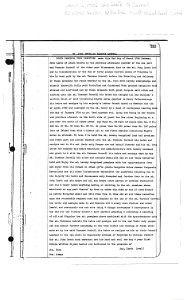
Deed: Andrew Falkenberry sells 150 acres in Anson Co., NC to Thos. Dixon

1761

Deed: Andrew Falkenberry sells 150 acres in Anson Co., NC to Thos. Dixon

February 26, 1761

In February 1761, Andrew Falkenberry sold Thomas Dixon his 150-acre plantation on Jones Creek. Isaac Falkenberry witnessed by his mark. This is one of the few records that place Andrew and Isaac together. They were possibly brothers, but that is not yet confirmed.
Read the full transcription →

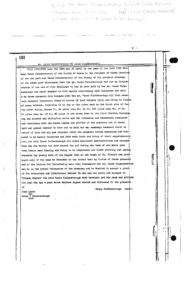
Deed: Benjamin Martin sells 150 acres in Anson Co., NC to William Moody

1762

Deed: Benjamin Martin sells 150 acres in Anson Co., NC to William Moody

August 9, 1762

In August 1762, Benjamin Martin sold William Moody 150 acres on the north side of the Pee Dee. The deed's recital gives the only record of Jacob Falkenbery's 1754 patent, and the tract later passed through Isaac and James McElroy. Martin witnessed two of Henry's deeds and was possibly a close neighbor, but that is not yet confirmed.
Read the full transcription →

Deed: Carrell sells the 80-acre Naked Creek tract in Anson Co., NC to Tallant

1762

Deed: Carrell sells the 80-acre Naked Creek tract in Anson Co., NC to Tallant

December 6, 1762

On 6 December 1762, Tarrance and Ann Carrell sold the 80-acre Naked Creek tract to Thomas Tallant for £50. The deed recites the land's whole history, from Henry Falkenberry's 1750 patent through John Leath and back to Carrell. This is the last link in a four-deed chain. John Leath is possibly the source of the later family name "Leath," but this is not yet confirmed.

Read the full transcription →

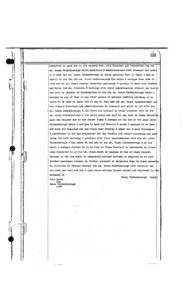
Deed: John Hornback sells 200 acres in Anson Co., NC to James Bruce

1763

Deed: John Hornback sells 200 acres in Anson Co., NC to James Bruce

February 28, 1763

In February 1763, John Hornback sold James Bruce 200 acres on Jones Creek. Andrew and Isaac Falkenburgh witnessed, both by mark. They were neighbors on the creek and possibly brothers, but that is not yet confirmed.
Read the full transcription →

Deed: Jacob Paul sells land on Brown Creek, Anson Co., NC to Hezekiah White

1763

Deed: Jacob Paul sells land on Brown Creek, Anson Co., NC to Hezekiah White

June 15, 1763

On 15 June 1763, Jacob Paul sold Hezekiah White his home tract on Brown Creek for £80. No Fortenberry is a party to the deed, but the Whites were close neighbors and associates of the Falkenburg family, which is probably why it is in this collection.

Read the full transcription →

Deed: Isaac and Mary Falconbury sell 150 acres in Anson Co., NC to Nicholas White

1768

Deed: Isaac and Mary Falconbury sell 150 acres in Anson Co., NC to Nicholas White

February 18, 1768

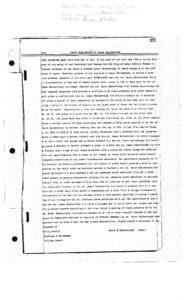
On 18 February 1768, Isaac Falconbury and his wife Mary sold Nicholas White 150 acres on the southwest side of the Pee Dee for £80. This deed is one of the few records that name Isaac's wife. Mary was possibly Mary Giles, but that is not yet confirmed.
Read the full transcription →

Deed: Henry Talley sells 197 acres in Anson Co., NC to Isaac Falconburg

1769

Deed: Henry Talley sells 197 acres in Anson Co., NC to Isaac Falconburg

January 23, 1769

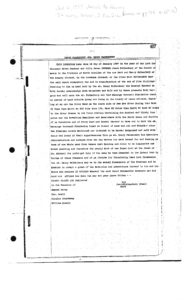
In January 1769, Henry Talley sold Isaac Falconburgh 197 acres on the Long Branch of Jones Creek for £60. Isaac had sold his other land to Nicholas White the year before, so this may have been a move within the neighborhood. His wife at the time was Mary, possibly Mary Giles, but that is not yet confirmed.
Read the full transcription →

Deed: Henry Fortenberry sells 150 acres in Anson Co., NC to Thomas Wade

1770

Deed: Henry Fortenberry sells 150 acres in Anson Co., NC to Thomas Wade

July 2, 1770

In July 1770, Henery Fortenberry sold Thomas Wade 150 acres on Jones Creek, the tract Henry had bought in 1752. This is the earliest deed in the collection to spell the name "Fortenberry." The seller was possibly a younger Henry rather than Henry Sr., which is not yet confirmed.

Read the full transcription →

Military Service Record: James Fortenberry, 5th South Carolina Regiment, Revolutionary War

1776

Military Service Record: James Fortenberry, 5th South Carolina Regiment, Revolutionary War

March 24, 1776

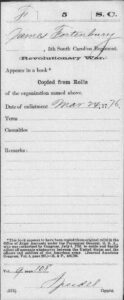
A War Department service card records James Fortenberry enlisting in the 5th South Carolina Regiment on 24 March 1776. The card gives no middle name, so whether this soldier is James Leath Fortenberry has not been confirmed.

Read the full transcription →

Deed: Jacob Falkenborough sells 200-acre Pleasant Hill in Anson Co., NC to Samuel Spencer

1782

Deed: Jacob Falkenborough sells 200-acre Pleasant Hill in Anson Co., NC to Samuel Spencer

January 14, 1782

In January 1782, during the Revolution, Jacob Falkenborough, son of Isaac, and his wife Charity sold the Pleasant Hill tract to Samuel Spencer, Esq. The deed recites the land's history back to 1748 and is the first to name Jacob's wife. Charity's maiden name is unknown.

Read the full transcription →

1800s

Census: James Fortenberry in Morgan District, North Carolina

1800

Census: James Fortenberry in Morgan District, North Carolina

1800

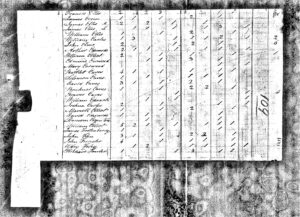
The 1800 federal census for Morgan District, North Carolina, lists a James Fortenberry heading a small household. It is one of the earliest records placing a James Fortenberry in western North Carolina. The household tallies are uncertain because the column headings are missing from the scan.

Read the full transcription →

Sheriff’s Sale: Ezekiel Able’s 790 acres in Cape Girardeau Dist., MO, where James Leath Fortenberry resides, are sold

1809

Sheriff’s Sale: Ezekiel Able’s 790 acres in Cape Girardeau Dist., MO, where James Leath Fortenberry resides, are sold

March 25, 1809

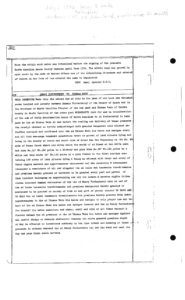
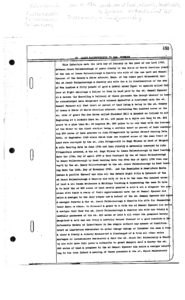
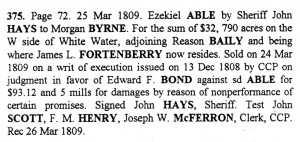
Ezekiel Able's 790 acres on the west side of White Water, next to Reason Baily and “whereon James L. Fortenberry now resides,” were seized by Sheriff John Hays to satisfy Edward F. Bond's December 1808 judgment of $93.12 and 5 mills in the Cape Girardeau Court of Common Pleas. The land was sold at auction on 24 March 1809 to Morgan Byrne for $32; the sheriff's deed is dated 25 March and was recorded 26 March 1809 (Deed Book C, pages 72–74; printed abstract no. 375). This post combines the original printed-abstract post with the full deed-book pages. It places James Leath Fortenberry on Able's land by March 1809, five weeks before the Ables bonded him a 300-acre tract of his own.

Read the full transcription →

Title Bond: Ables bond 300 acres in Cape Girardeau Dist., MO to James Leath Fortenberry

1809

Title Bond: Ables bond 300 acres in Cape Girardeau Dist., MO to James Leath Fortenberry

May 1, 1809

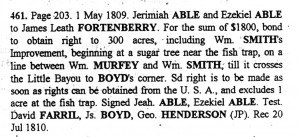
On 1 May 1809 Jeremiah (Jerimiah) and Ezekiel Able of the District of Cape Girardeau, Territory of Louisiana, bound themselves to James Leath Fortenberry for $1,800 to give him clear title to 300 acres, including William Smith's improvement, beginning at a sugar tree near the fish trap, on a line between Wm. Murfey and Wm. Smith and across the Little Bayou to Boyd's corner, as soon as the United States confirmed their own (Spanish-era) claim. They reserved one acre at the fish trap. Ezekiel Able acknowledged the bond before Justice George Henderson; David Farril and Js. Boyd also witnessed. It was recorded 20 July 1810 in Deed Book C, pages 203–205 (printed abstract no. 461). This post combines two earlier posts that shared the abstract image with the full deed-book pages and clearer photographs. James Leath Fortenberry's middle name possibly traces back to John Leeth of Anson County, NC (1750s), but this is not yet confirmed.

Read the full transcription →

Court Record: James L. and Henry Fortenberry serve on juries in Cape Girardeau

1810

Court Record: James L. and Henry Fortenberry serve on juries in Cape Girardeau

July 18, 1810

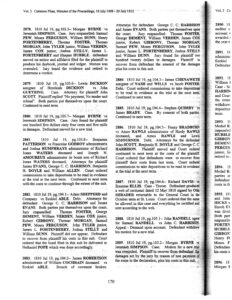
In July 1810, James L. and Henry Fortenberry sat together as jurors in the Cape Girardeau Court of Common Pleas. James L. also heard a debt case against Ezekiel Able, the same man who had given him a title bond the year before.

Read the full transcription →

Court Record: Henry Fortenberry – assault

1812

Court Record: Henry Fortenberry – assault

1812

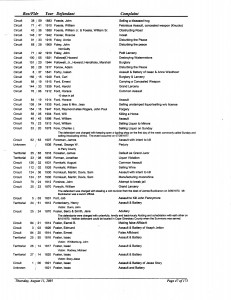
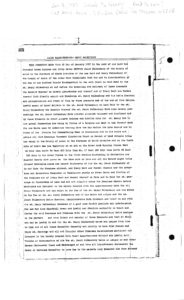
A typed index of Cape Girardeau County criminal files lists an 1812 territorial case against Henry Fortenberry for assault and battery on John Dunn. This Henry was possibly a son or relative of James Leath Fortenberry, but that is not yet confirmed.
Read the full transcription →

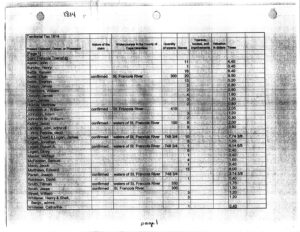
Tax List: James L. Fortenberry in German Township, Cape Girardeau County

1814

Tax List: James L. Fortenberry in German Township, Cape Girardeau County

1814

The 1814 territorial tax list for Cape Girardeau County shows James L. Fortenberry in German Township, taxed $2.00 on five enslaved people with no land listed. The index also names Henry Fortenberry and the Ables' neighbors in other townships.

Read the full transcription →

Land Grant: North Carolina grants James Fortenberry 27 acres in Rutherford Co., NC

1816

Land Grant: North Carolina grants James Fortenberry 27 acres in Rutherford Co., NC

December 7, 1816

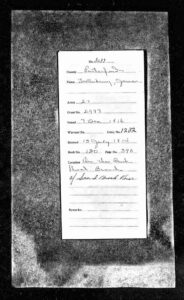
North Carolina Grant No. 2997 gave James Fortenberry 27 acres on the Beech Shoal Branch of Second Broad River in Rutherford County, entered in 1814 and granted in 1816. James Leath Fortenberry was in Missouri by 1809, so this James was possibly a different man, which is not yet confirmed.

Read the full transcription →

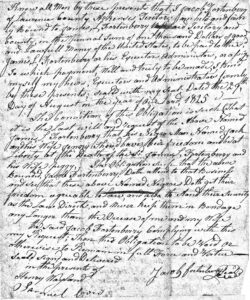
Conditional Bond: Jacob Fortenberry pledges to free Jack and Jenny, per James Leath Fortenberry’s wishes

1825

Conditional Bond: Jacob Fortenberry pledges to free Jack and Jenny, per James Leath Fortenberry’s wishes

August 29, 1825

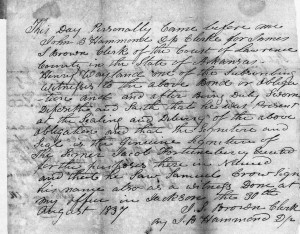
On 29 August 1825 Jacob Fortenberry (Fortenbery) of Lawrence County, Arkansas Territory, bound himself to James L. Fortenberry for $1,000. The bond was void only if Jacob carried out “the last will and request” of James L.: that Jack and his wife Jenny, enslaved by James L., be given their freedom at the deaths of James L. and his wife Peggy, with Jacob standing as their security and never holding them in bondage. Henry Wayland and Samuel Crow witnessed. Wayland proved the bond in Lawrence County on 30 August 1837, and Circuit Clerk James S. Brown certified its recording (Book C [?], pages 18–19) on 29 March 1838. Although the family has long called it James Leath's will, the surviving document is this bond; no will has been found. This post combines the original post with the full transcription of the bond, the witness's proof, the clerk's certificate and the docket.

Read the full transcription →

Court Record: Jacob Fortenberry’s 1825 bond is proved and recorded

1837

Court Record: Jacob Fortenberry’s 1825 bond is proved and recorded

August 30, 1837

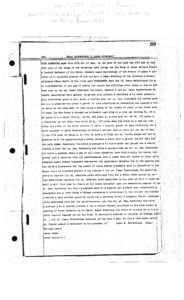
In August 1837, witness Henry Wayland swore that the 1825 bond for the freedom of Jack and Jenny was genuinely signed by Jacob Fortenberry. In March 1838 the Lawrence County clerk certified that it had been recorded. These certificates possibly followed the deaths of James L. and Peggy, but that is not yet confirmed.
Read the full transcription →

Court Record: Jacob Fortenberry accused of stealing hogs

1851

Court Record: Jacob Fortenberry accused of stealing hogs

December 18, 1851

In December 1851, Allen Jones accused Jacob Fortenberry of keeping eleven hogs that strayed after Jones bought them from Jacob's son Sevier. The court papers end with the grand jury's verdict, "not a True Bill," filed in April 1852, so Jacob was never charged.
Read the full transcription →

Claim: Fortenberry property confiscated during the Civil War

1862

Claim: Fortenberry property confiscated during the Civil War

December 26, 1862

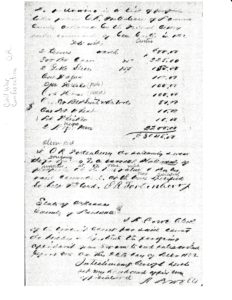
In December 1862, O. R., Taylor and William M. Fortenberry of Lawrence County, Arkansas, swore to what Gen. Curtis's Federal army took from them: corn, horses, tools, whiskey, and enslaved people. Their claims totaled more than $5,800. One of the papers is a Confederate receipt showing Taylor sold corn and oats to the Southern army in 1863.
Read the full transcription →

Claim: Oliver Rice Fortenberry lists property taken by Union soldiers

1862

Claim: Oliver Rice Fortenberry lists property taken by Union soldiers

December 26, 1862

Oliver Rice Fortenberry swore on 26 December 1862 that the Union army under Gen. Curtis had taken property worth $3,045 from his Lawrence County farm. The list includes cows, corn, steers, a wagon, a mule, a horse, blacksmith's tools, and two enslaved men.

Read the full transcription →

Family Bible: Harper family births and deaths

1876

Family Bible: Harper family births and deaths

September 15, 1876

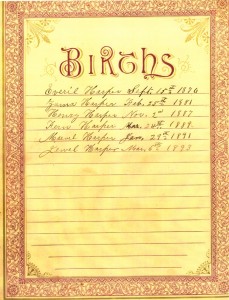
The Harper family Bible's Births and Deaths pages record Dr. J. R. Harper's six children, born 1876 to 1893, and family deaths from 1876 to 1984, including Fern Harper Fortenberry, who married into the Fortenberry family and died on 15 January 1977.

Read the full transcription →

1900s

Marriage License: Aubrey (O. F.) Fortenberry and Carrie Bundy marry in Cooke County, Texas

1904

Marriage License: Aubrey (O. F.) Fortenberry and Carrie Bundy marry in Cooke County, Texas

October 1, 1904

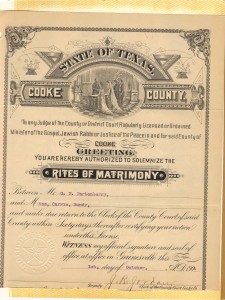
O. F. Fortenberry and Miss Carrie Bundy received their marriage license in Gainesville, Cooke County, Texas, on 1 October 1904, and minister J. J. Walker married them the next day. The family identifies O. F. as Aubrey Sloan "Orb" Fortenberry (1884–1929); why he appears as "O. F." is not known.

Read the full transcription →

Gravestone Notes: Lela Mae records dates for family gravestones

1971

Gravestone Notes: Lela Mae records dates for family gravestones

1971

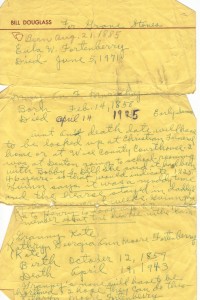
Lela Mae Fortenberry Douglass jotted down the dates for three gravestones: Eula W. Fortenberry, Aunt Ann (Mary Ann F. Murphy), and "Granny Kate," Kathryn Georgia Ann Moore Fortenberry. She also recalled that Aunt Ann's funeral came at such a muddy time that the hearse stayed in the family barn for several weeks.

Read the full transcription →